HYPATIA: a new, innovative detector array
 |
Rövid név |
HYPATIA |
| Azonosító |
2021-4.1.2-NEMZ_KI-2024-00059 |
| Kezdete |
01/01/2026 |
| Vége |
31/12/2027 |
| Szakmai vezető az Atomkiban |
|
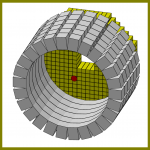
The SUNFLOWER collaboration has been studying the structure and reactions of exotic isotopes to uncover the origin and properties of the interaction between the constituents of atomic nuclei. Its success was based on a large array of NaI(Tl) detectors called DALI2+. The experiments have been performed at the RIKEN Nishina Center, the world-leading isotope factory. Our collaboration has decided to construct the successor of DALI2+: HYPATIA. This is a very ambitious and innovative project in which we plan to build a huge array of LaBr3 and GAGG crystals. Due to the excellent characteristics of these crystals, the new array will provide the possibility to reach untouched frontiers of the map of atomic nuclei. The development and construction of the detectors will be performed in an international collaboration, and the array will be tested at the RIKEN Nishina Center.
Budget: 800,000 HUF
|
Study of nuclei lying in the vicinity of neutron drip-line with DALI2+ detector array
 |
Rövid név |
Nuclear structure studies with DALI2+ |
| Azonosító |
2021-4.1.2-NEMZ_KI-2024-00057 |
| Kezdete |
01/01/2026 |
| Vége |
31/12/2027 |
| Szakmai vezető az Atomkiban |
|
Experiments on radioactive ion beams have revealed peculiar, unexpected nuclear physics phenomena in nuclei lying far from the stability line: the large energy gaps between neutron and proton orbits corresponding to closed nucleon shells disappear, new energy gaps appear, nuclei expected to be spherical become deformed, and neutron glories form around the core of the nuclei. As part of the international collaboration SUNFLOWER, ATOMKI researchers investigate the structure and reactions of exotic isotopes at the world's leading radioactive ion beam facility, the RIKEN Nishina Centre. The success of our research is based on a high-performance detector array, DALI2+. We have participated in the upgrade of this detector system in recent years. The next step will be to determine the deformation of the nuclear shapes in neutron-rich nickel and copper isotopes. The Hungarian research team is going to play a key role in carrying out the experiment.
Project budget: 800,000 HUF
|
Beta-strength function in nuclei with extreme isospin
 |
Rövid név |
- |
| Azonosító |
2021-4.1.2-NEMZ_KI-2024-00055 |
| Kezdete |
01/01/2026 |
| Vége |
31/12/2027 |
| Szakmai vezető az Atomkiban |
|
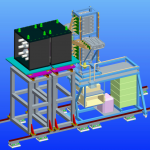
The atomic nuclei of the chemical elements that make up our world are formed through nuclear processes in stars. Formation probability of different elements can be estimated using nucleosynthesis simulations. Essential input parameters for these simulations are the characteristics of nuclear beta decay, beta decay rates and half-lives. For nuclei located far from the stability, we can determine these values through experiments using radioactive beams. We conduct our experiments at the RIKEN Nishina Center in Tokyo. As part of our project, we determine the characteristics of beta decay in heavier neutron-rich nuclei as well as proton-rich nuclei located on the other side of the valley of stability. The projects have been approved by the RIKEN Program Advisory Committee with a high rating, and researchers of ATOMKI are (co-)spokespersons. These experiments are part of an international collaboration in which the Hungarian research group plays a key role.
Project budget: 1,300,000 HUF
|
Nuclear spectroscopy experiments using NEEDI detector system
 |
Rövid név |
- |
| Azonosító |
2021-4.1.2-NEMZ_KI-2024-00054 |
| Kezdete |
01/01/2026 |
| Vége |
31/12/2027 |
| Szakmai vezető az Atomkiban |
|
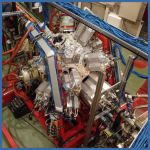
We expect various phenomena related to the deformation of nuclear shapes to arise in some of the proton-rich nuclei. The structure of these nuclei is no fully known yet. Our goal in this project is to gather as much knowledge as possible about the excited states of these atomic nuclei. We will conduct our experiments using one of the newest European gamma-spectroscopic setup, the NEEDI at the HIL UW (Heavy Ion Laboratory, University of Warsaw). This apparatus is a high-precision, high-efficiency system consisting of the EAGLE gamma-ray spectrometer, the NEDA neutron detector, and the DIAMANT charged-particle detector, latter developed and operated by ATOMKI. The experiments will be carried out as part of an international collaboration in which the Hungarian research group plays a leading role.
Project budget: 1,300,000 HUF
|
Essential (alpha,neutron) reaction cross section measurements for nuclear technology and nuclear physics applications
 |
Rövid név |
- |
| Azonosító |
TKCS-2024/56 |
| Kezdete |
01/02/2025 |
| Vége |
31/12/2027 |
| Szakmai vezető az Atomkiban |
|
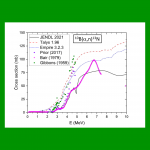
Accurate nuclear reaction data are essential for 21st century nuclear technology and scientific applications. In 2021, experts from the International Atomic Energy Agency reviewed the available experimental and theoretical information on (a,n) reactions and – since they are insufficient for many modern applications – made proposals for further experiments in the form of a so-called “white paper” (further details: INDC(NDS)-0836). Within the framework of the TKCS-2024/56 project, we measure cross sections of several nuclear reactions with high accuracy in the relevant energy range using experimental techniques that have not been used before.
- Applicant: HUN-REN ATOMKI
- Co-applicant: Budapest University of Technology and Economics
- Budget for years 2025-27: 248.9 MHUF
|
Addressing PRiorities of Evaluated Nuclear Data in Europe
 |
Rövid név |
APRENDE |
| Azonosító |
101164596 / Call ID: HORIZON-EURATOM-2023-NRT-01 |
| Kezdete |
01/10/2024 |
| Vége |
30/09/2028 |
| Weboldal |
|
| Szakmai vezető az Atomkiban |
|
The project is designed to address the critical demand for accurate and advanced nuclear reaction and decay data. These data are essential for modelling and simulation tools crucial to energy-related applications (including nuclear fission and fusion) as well as healthcare, space exploration and radiation protection.
The main objectives are (1) conducting experiments to obtain new and improved nuclear data, (2) evaluating available experimental nuclear data, (3) validating evaluated nuclear data files, (4) supporting access to key experimental infrastructures, (5) developing and improving detectors, techniques, infrastructures, analysis methods, (6) developing new infrastructure to develop isotopically enriched materials, (7) identifying new nuclear data priorities, (8) assessing nuclear data competences. ATOMKI contributes to objective (2) and (8).
The consortium includes 37 partners and is lead by CIEMAT, Spain.
The objectives will financed with 4 MEUR, the share of ATOMKI is 21.9 kEUR.
|
Nuclear technology research and development based on particle accelerators
 |
Rövid név |
- |
| Azonosító |
TKP2021-NKTA-42 |
| Kezdete |
01/01/2022 |
| Vége |
31/12/2025 |
| Weboldal |
|
| Szakmai vezető az Atomkiban |
|
- The project involves the applications of nuclear technology based on the data collected through the fundamental research, that's why it is indispensable to determine nuclear structure as well as nuclear reaction data by using experimental technique.
- One of the important area of the nuclear technology is the production of radioisotopes, on the one hand as a radiation source, on the other hand as an additive, as well as in the volume of the material to be investigated. These tracers can then applied for following processes in a rapid and economic way.
- Production of new surface layers by irradiation and investigation of those, elaboration of irradiation and measurement methods for wear measurement of materials of novel constitution and structure. Development of novel nuclear particle detectors based on nanotechnology.
- Development of accelerator based production on therapeutic and diagnostic radionuclides, elaboration of their radiochemical separation. Development of theranostic radioisotopes and targeted radionuclide therapy.
Budget: 1.191.526.000 HUF
|
Supplying Accurate Nuclear Data for energy and non-energy Applications
 |
Rövid név |
SANDA |
| Azonosító |
847552 / Call ID: H2020 NFRP-2018 |
| Kezdete |
01/09/2019 |
| Vége |
31/08/2024 |
| Weboldal |
|
| Szakmai vezető az Atomkiban |
|
Accurate nuclear data are of fundamental importance in a number of different nuclear and non-nuclear fields. The EU-funded SANDA project aims to produce a data library containing high-quality nuclear measurements on key isotopes and reactions. The project puts special focus on how data are measured, evaluated and validated. This high-accuracy nuclear data can be exploited by safety authorities, research institutions, the nuclear industry and health organisations.
The consortium includes 35 partners and is lead by CIEMAT, Spain.
ATOMKI as a member of the International Network of Nuclear Structure and Decay Data (NSDD) contributes with ENSDF evaluation of nuclear structure and decay data for the isotopes belonging to the A=101 and A=103 nuclear mass chains, and for four other isotopes that are important for medical purposes.
The project is financed with 3.5 MEUR, from which ATOMKI received 20.0 kEUR.
|
Hungary in the CMS experiment of the Large Hadron Collider
 |
Rövid név |
CERN-OTKA |
| Azonosító |
K-109803 |
| Kezdete |
01/12/2013 |
| Vége |
30/09/2017 |
| Weboldal |
|
| Szakmai vezető az Atomkiban |
|
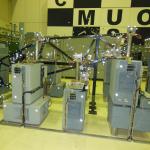
Participation in the upgrade of the alignment system planned for 2013 and 2014. Individual calibration and installation of the new devices. Reinstallation of the alignment system on the CMS detector. Commissioning of the alignment system. Validation of the alignment data with real physics data collected by the CMS experiment.
Refurbishment of the CMS laboratory for alignment and the FBGs. Purchasing devices needed for the new tests. Participation in the research and development of new FBG and LPG sensors for the CMS detector. Installation of new FBG sensors in the CMS detector. Commissioning of the upgraded FOS4CMS system and important upgrades to the software system. Operating the FOS4CMS system. Radiation hardness tests on the new sensors. Data analysis of the radhard measurements.
Participation in the upgrade project of the CMS Muon EndCap System. Expert works on the wire tension measurement system.
|
Preparation for training and R&D tasks connected to the Hungarian ELI project
 |
Rövid név |
Training connected to the Hungarian ELI project |
| Azonosító |
TÁMOP-4.1.1.C-12/1/KONV-2012-0005 |
| Kezdete |
15/04/2013 |
| Vége |
30/06/2015 |
| Weboldal |
|
| Szakmai vezető az Atomkiban |
|
The Hungarian basic and applied research based on lasers is prosperous and internationally recognized in spite of its small extents. This fact is reflected in the decision of the international preparatory consortium of ELI according to which the Hungarian tender for location was supported and Szeged was named as the site of the research institute ELI-ALPS (Extreme Light Infrastructure - Attosecond Light Pulse Source). The main technical purpose of the present project is the familiarization of research methods and light sources connected to ELI-ALPS with the researchers of the various fields of science. The realization of the project will be made by the consortium with constituent institutions of University of Szeged, University of Pécs, Institute for Nuclear Research Hungarian Academy of Sciences (MTA Atomki) in Debrecen and College of Kecskemét. The leader of the consortium is University of Szeged. MTA Atomki together with University of Debrecen as a subcontractor participates in the realization of the project with several training forms.
Training courses (in Hungarian)
|
1 – 10 mutatva 11 elemből
 Magyar