Thin-layer scintillators for future detectors in space
 |
Rövid név |
- |
| Azonosító |
ESA 4000145343 |
| Kezdete |
01/09/2024 |
| Vége |
30/11/2025 |
| Weboldal |
|
| Szakmai vezető az Atomkiban |
|
This project has been research and development activity carried out under ESA contract 4000145343 by HUN-REN Institute for Nuclear Research. The technical basis for this work is the thin-layer production technology formerly developed within the cooperation of the HUN-REN Institute for Nuclear Research and the University of Szeged.
The thin layers are synthesized of copper-halide perovskites, which exhibit strong luminescence following the exposure to external radiation. We selected the Cs3Cu2I5 (CCI325) composition for the development of a scintillator-based charged-particle detector, which produced comparable light yield to conventional inorganic scintillators. Under this contract we conceptualized a device constructed of a CCI325 thin layer, which has high application potential for monitoring cosmic radiation in space.
Budget: 98,484 EUR
|
Nuclear technology research and development based on particle accelerators
 |
Rövid név |
- |
| Azonosító |
TKP2021-NKTA-42 |
| Kezdete |
01/01/2022 |
| Vége |
31/12/2025 |
| Weboldal |
|
| Szakmai vezető az Atomkiban |
|
- The project involves the applications of nuclear technology based on the data collected through the fundamental research, that's why it is indispensable to determine nuclear structure as well as nuclear reaction data by using experimental technique.
- One of the important area of the nuclear technology is the production of radioisotopes, on the one hand as a radiation source, on the other hand as an additive, as well as in the volume of the material to be investigated. These tracers can then applied for following processes in a rapid and economic way.
- Production of new surface layers by irradiation and investigation of those, elaboration of irradiation and measurement methods for wear measurement of materials of novel constitution and structure. Development of novel nuclear particle detectors based on nanotechnology.
- Development of accelerator based production on therapeutic and diagnostic radionuclides, elaboration of their radiochemical separation. Development of theranostic radioisotopes and targeted radionuclide therapy.
Budget: 1.191.526.000 HUF
|
Improved implant osseointegration by novel duplex aluminum- and titanium-oxide layers grown by ALD method
 |
Rövid név |
- |
| Azonosító |
2019-2.1.11-TÉT-2020-00154 |
| Kezdete |
01/01/2022 |
| Vége |
31/12/2023 |
| Szakmai vezető az Atomkiban |
|
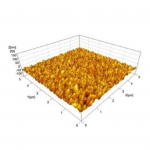
The development of titanium-based orthopedic and dental implants is aimed to create coating layers that increase corrosion resistance, have antibacterial activity and promote bone tissue embedding. The goal of this work is the preparation of double coating layers and the examination of their structural and biological properties. In addition to their biocompatibility, these layered structures reduce diffusion of metal ions into the living tissue. The growth defects and pores of the bioinert TiAlN/CNx multilayer and the biotolerant TiAlSiN nanolayer will be closed with titanium- and aluminium-oxide layers, thus reducing the toxic effect caused by implants.
The project is realised in the frame of a bilateral Science and Technology (S&T) cooperation.
Cooperating partner: Faculty of Technical Sciences, University of Novi Sad, Novi Sad, Serbia
Project budget: 1.727.112 HUF
|
Porous metal thin layers (black metals) with surface receptors as high-potentiality materials for gas sensing
 |
Rövid név |
BLACKSENS |
| Azonosító |
Visegrad Fund Ref. JP22420 & 2019-2.1.7-ERA-NET-2021-00021 |
| Kezdete |
01/11/2021 |
| Vége |
31/10/2024 |
| Weboldal |
|
| Szakmai vezető az Atomkiban |
|
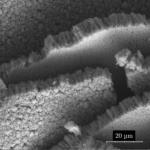
The goal of the project is to produce novel high-sensitivity Quartz Crystal Microbalance (QCM) based gas sensors for the detection of nitrogen-oxides and organic nitrates. Heightened sensitivity will be achieved by raising the active surface area and the number of specific receptor molecules bound to it, using porous black metal layers. The Laboratory of Materials Science of ATOMKI will perform the morphological (XRD, FIB-SEM) and depth (SNMS) characterization of the synthesized surfaces and layer structures.
The project is realised in a consortium, consisting of the following members:
- University of Chemistry and Technology (Prague, Czech Republic) - leader
- Kitami Institute of Technology (Kitami, Japan)
- Polymer Institute of Slovak Academy of Sciences (Bratislava, Slovakia)
- University of Opole (Opole, Poland)
- ATOMKI - Institute for Nuclear Research (Debrecen, Hungary)
|
Quantum certification: from small to large systems
 |
Rövid név |
Quantum certification |
| Azonosító |
LENDULET_2019-98 |
| Kezdete |
01/07/2019 |
| Vége |
30/06/2024 |
| Szakmai vezető az Atomkiban |
|
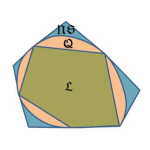
Recent technological advances have made it possible to apply quantum information science for a wide range of information tasks. We are witnessing a new quantum revolution that would guarantee communication security and provide outstanding computing power. However, it also sets great challenges regarding the certification task that the new quantum devices and protocols operate according to specification. Indeed, given a quantum device, how could the user of this device make sure that it performs a certain computational problem properly? This quantum certification task stands out as a key aspect in the EU Quantum Technologies Program as well. The aim of the project is to establish a new research line in the certification of complex quantum systems using large-scale tools, crucial for future device-independent quantum technologies.
|
Investigation of atomic and molecular processes using ultrashort light and electron pulses at the ELI-ALPS, development of methods and experimental tools
 |
Rövid név |
. |
| Azonosító |
2018-1.2.1-NKP-2018-00010 |
| Kezdete |
01/09/2018 |
| Vége |
31/08/2023 |
| Weboldal |
|
| Szakmai vezető az Atomkiban |
|
The aim of the project is to enhance the Hungarian research opportunities related to the ELI-ALPS Laser Institute, while also trying to establish new research topics (e.g. time resolved atomic processes). The University of Pécs who is the leader of the consortium, together with the Centre for Energy Research is developing a new kind of electron acceleration method that could be adapted for usage at the ELI-ALPS. The Institute for Nuclear Research (Atomki) develops an experimental tool and wants to realize a scientific program based on it using the available infrastructure at Szeged. The scientific goals include studying the effects of few-cycle laser pulses in ionization and investigating the timescale dynamics of complex processes of atomic electrons.
- Total financial support: 297.096.952 Ft
- University of Pécs (leader of consortium): 134.185.137 Ft
- Institute for Nuclear Research: 118.906.383 Ft
- Centre for Energy Research: 44.005.432 Ft
|
Regional Workshop for Excellence in Materials Science - Research Program and Development of the Infrastructure
 |
Rövid név |
Regional Workshop for Excellence in Materials Science |
| Azonosító |
GINOP-2.3.2-15-2016-00041 |
| Kezdete |
01/01/2017 |
| Vége |
28/09/2021 |
| Szakmai vezető az Atomkiban |
|

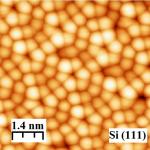
The scope of the project is the development of Materials Research Laboratory of Atomki into a higher research level. The realization of the project takes place in the form of a consortium with the University of Debrecen. The leader of the consortium is the University of Debrecen. In the frame of the project an improvement of the technical level of the Laboratory and a research program will be carried out. New scientific instruments will be installed in the Laboratory: X-Ray Diffractometer (XRD) and an electron microscope equipped with a focused ion beam source. The main research areas of the project are: study of interactions between an optical sensitive material and light (or ions and electrons); study of surface atomic layers prepared in ultrahigh vacuum; preparation of 1D objects and 2D atomic layers; study of ion-surface interactions and ion beam surface modification; surface functionalization of silica aerogels and investigation of their fracture mechanism.
|
Exploration and development of a novel control software framework for research infrastructures
 |
Rövid név |
eMFC (e-Modelling Framework for Control systems) |
| Azonosító |
GINOP-2.2.1-15-2016-00012 |
| Kezdete |
01/12/2016 |
| Vége |
28/02/2021 |
| Weboldal |
|
| Szakmai vezető az Atomkiban |
|
In the frame of this project, research infrastructure units of Atomki are set into a control software framework thus establishing a remotely controllable virtual laboratory. The aim of the system integration is to create a complex infrastructure suitable to make radiobiological and radiation hardening measurements. The subsystems involved in the integration: cyclotron accelerator - neutron source and vertical beam-end for isotope production, tandetron accelerator, Van de Graaff accelerator, Co-60 source, MiniPET-3 small animal Positron Emission Tomograph and radiochemical laboratory, ESCA (Electron Spectrometer for Chemical Applications), MGGL (Matra Gravitational and Geophysical Laboratory), ECR ion source, PEM (Physical Environment Monitoring) system.
Leader of consortium:
- Evopro NPA Kft, former Evopro Systems Engineering Kft (support: 398.725.723 Ft, 57%)
Members of consortium:
- Atomki (support: 185.500.010 Ft, 100%)
- Biological Research Centre (support: 145.561.008 Ft, 100%)
- University of Szeged (support: 239.834.823 Ft, 100%)
|
Establishing a world class research environment at the new Tandetron Laboratory of MTA Atomki
 |
Rövid név |
Tandetron |
| Azonosító |
GINOP-2.3.3-15-2016-00005 |
| Kezdete |
20/06/2016 |
| Vége |
20/06/2019 |
| Weboldal |
|
| Szakmai vezető az Atomkiban |
|
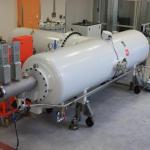
MTA Atomki has installed the Tandetron accelerator in May 2014. The present setup includes a Duoplasmatron ionsource and a swithing magnet. These have been funded by the MTA through the Infrastruture grants.
The aim of the present project, and the expected result, the completion of the Tandetron Laboratory. It is anticipated to build a world class facility with broad range of methods and equipment that will be available for multiple users and will make the institute and its accelerators a centre of excellence. This laboratory is planned to be able to provide the users with outstanding opportunities for multiple research directions. We will offer such a technical level and work with such high stadard of researcher knowledge that guarantees our presence in the intenational infrastructure-networks and be able to participate is large collaborations.
|
Distribution of Atomki's scientific results - Understandable-available physics
 |
Rövid név |
MEF |
| Azonosító |
TÁMOP-4.2.3-12/1/KONV-2012-0057 |
| Kezdete |
01/01/2013 |
| Vége |
28/02/2015 |
| Weboldal |
|
| Szakmai vezető az Atomkiban |
|
The aim of the project is dissemination which means throwing seeds around, in other words distribution of knowledge. The project has six major and some minor activities:
- traveling physics and
- interdisciplinary workshop
both with different topics in the four terms: water, protection systems of the Earth, cold - warm and energy,
- interactive multimedia (Miasma - or Devil's Stone, interactive film),
- international school before the conference Nuclei in the Cosmos,
- Atomki brochures,
- Atomki webpage.
|
1 – 10 mutatva 10 elemből
 Magyar